Fascia and Soffit Damage: How It Affects Your Roof and Gutters
Fascia is the vertical board along your roof edge that holds your gutters; soffit is the panel underneath that ventilates…

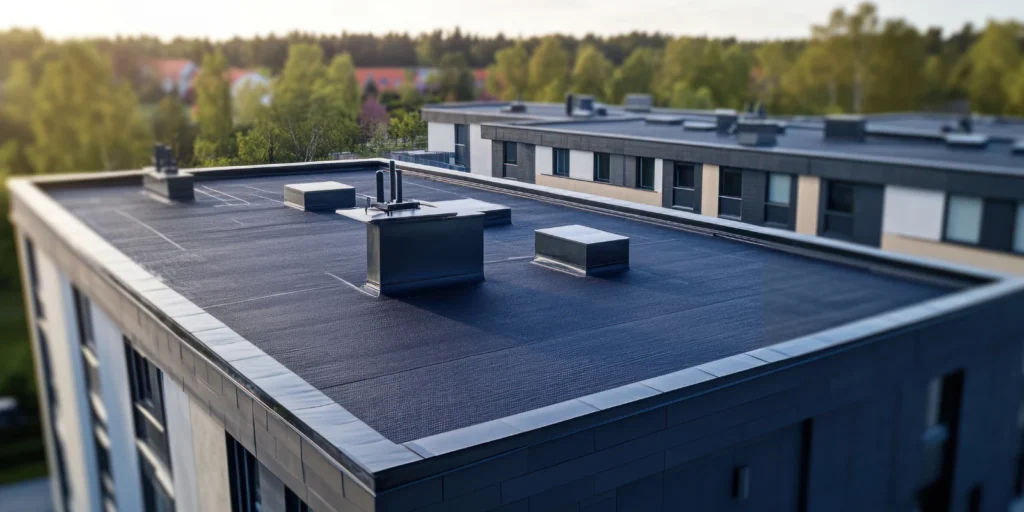
Roof color is rarely the main driver of energy savings at all, insulation is. A well-insulated roof largely erases the difference between white and dark. White TPO reflects about 75 percent of sunlight and cuts summer cooling costs, but Bedford is a heating-dominated climate, so the year-round energy math is close to a wash, studies show only pennies of difference per square foot either way. Insulation, not color, drives roof energy performance. For a hidden commercial flat roof, white TPO still usually wins on cost and energy code compliance.
White roofs are everywhere in the South, so it’s natural to ask whether a white TPO roof makes sense up here in Bedford’s cold climate. Here’s the honest, direct answer: it depends, and the difference is smaller than most people think. A white TPO membrane reflects roughly three-quarters of the sun’s energy and reliably lowers summer air-conditioning costs. But in a heating-dominated climate like Bedford, a dark roof recovers some of that by absorbing warmth in winter, so studies of northern cities find the net annual energy difference between white and dark roofs is only a couple of cents per square foot.
TPO color controls how much solar energy the roof reflects versus absorbs, which affects the temperature of the roof and the space below. White TPO reflects about 75 percent of incoming sunlight, so the commercial roof membrane and the building stay cooler in summer. Darker TPO colors reflect far less and absorb more heat, which erases most of the cool-roof effect. That single property, reflectance, is the heart of the whole white-versus-dark debate.
In a hot, cooling-dominated climate, that reflectance is a clear win, less absorbed heat means lower air-conditioning bills. In a cold, heating-dominated climate, the picture flips partly the other way, since a dark roof’s absorbed heat can slightly offset winter heating. Bedford sits firmly in heating-dominated territory, which is exactly why the color question here isn’t as simple as it looks in Miami.
The popular belief that white roofs always save energy doesn’t fully hold up in a northern climate like Bedford’s. The research paints a more balanced picture, so it’s worth separating the marketing from the measured results. Here’s what the studies actually show.
For a roofing company in Bedford, the year-round energy difference between white and dark is nearly negligible. Multiple studies of northern climates found white roofs producing a tiny net energy loss compared with dark ones, on the order of a couple of cents per square foot per year. The summer cooling savings are real, but they’re largely offset by higher winter heating, so the net is close to zero.
The factor that truly drives roof energy performance is insulation, not color. Research consistently shows that a thick, well-installed roof layer of insulation largely eliminates the temperature difference between white and dark roofs, and it works in every season. In other words, adding insulation depth or fixing air leakage delivers far greater energy savings than switching membrane color ever could. Color influences energy performance; it rarely determines it.
Beyond energy, color can affect moisture in the roof system, which matters in a cold climate. Some research notes that in very cold zones, a highly reflective roof stays colder and can raise the risk of condensation forming within the assembly. It’s a nuanced, system-level issue rather than a dealbreaker, but it’s another reason the choice should be made by a roofing professional looking at the whole assembly, not just the color swatch.
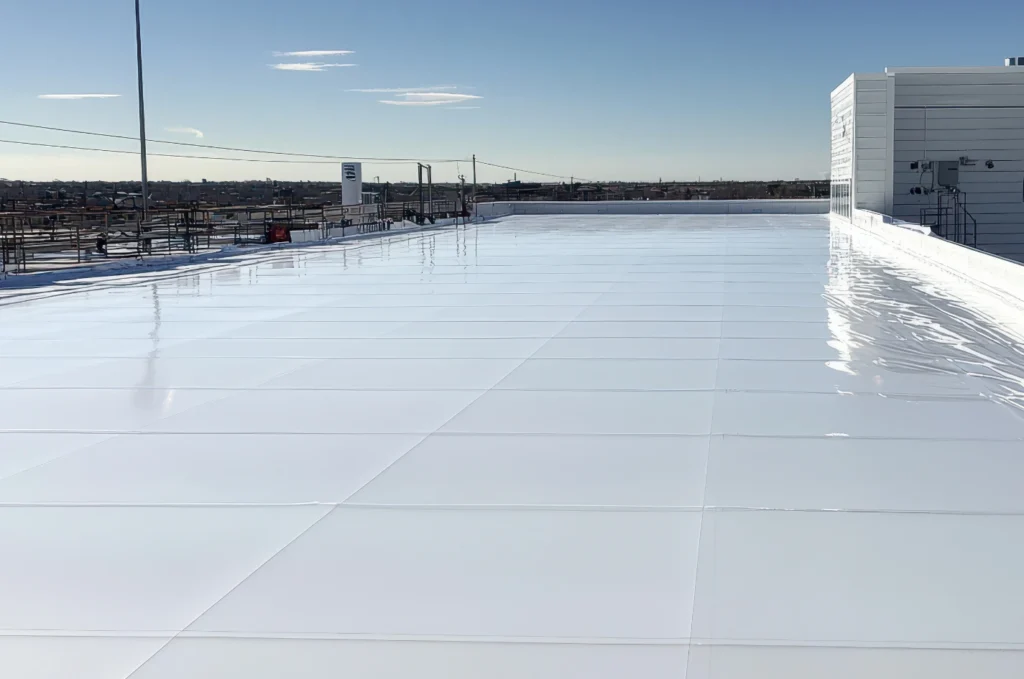
White TPO still makes sense for roof replacement in Bedford in several common situations, even with the energy math being close. The cooling benefit, the cost, and the building code often tip the balance toward white despite our cold winters. White is likely the right call when:
The simple decision path: if the roof is out of sight, choose white. If it’s visible and the look matters, a darker color can be worth the premium, just know you’re paying for aesthetics, not energy.
Far more important than color is how well the entire roof repair system in Bedford is designed and installed. Color is just one component of a roof; insulation level, air sealing, HVAC efficiency, and installation quality all have a bigger impact on energy performance and lifespan. A perfectly chosen color installed over thin insulation and sloppy seams is a poor roof, while any color over a well-built, well-insulated assembly performs beautifully.
This is why the smartest move for a Bedford building owner is to focus the budget where it counts. Investing in adequate insulation depth and expert installation delivers real, year-round savings and a longer-lasting roof, benefits that dwarf the pennies-per-square-foot color debate. Get the system right, then pick the color that fits your building and your code requirements.
For Bedford and Greater Bedford buildings, a few local realities should guide the TPO color decision.
Heating-dominated climate: Long, cold winters mean the summer cooling savings from white are largely offset, so color is a minor energy factor here.
Insulation is king: With roughly 100 freeze-thaw cycles and hard winters, proper insulation depth matters far more than membrane color for both energy and durability.
Visibility and code: Most low-slope commercial roofs here are out of sight, so white usually wins on cost and code, unless the roof is visible and aesthetics matter.
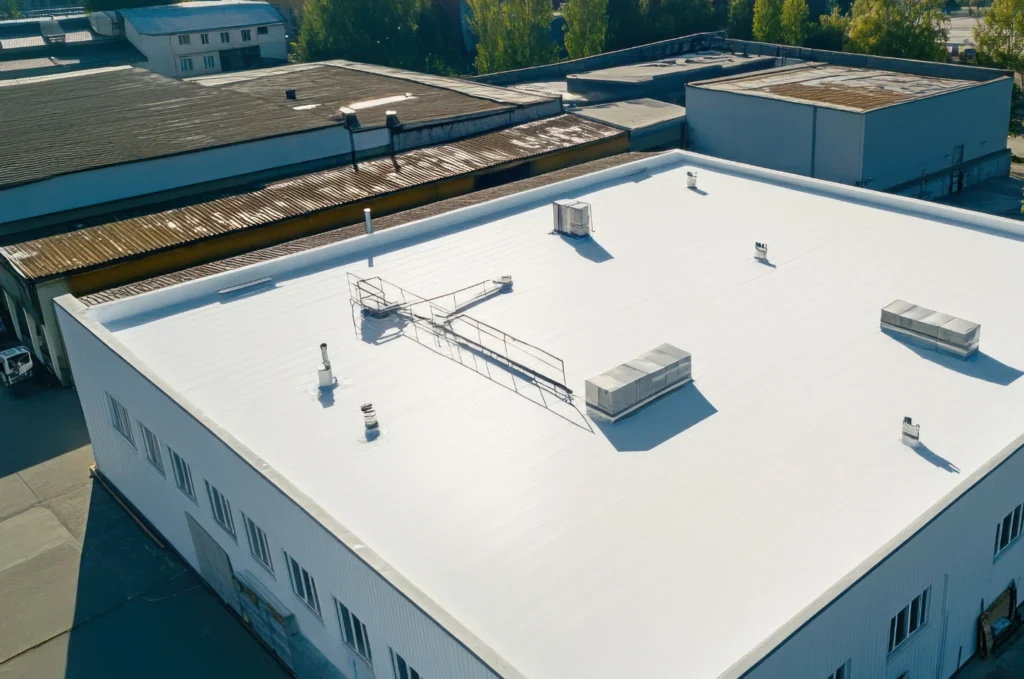
At OneGuard Roofing, we help Bedford building owners look past the color hype to what actually drives roof performance. As a commercial roofing team offering expert roofing services in Bedford, we design and install the whole TPO system right, insulation,
The summer cooling savings are real yet largely offset by winter heating, so on energy alone the color is nearly a wash here. White still tends to win because it’s the standard, lowest-cost option and often satisfies energy code, especially on a hidden roof where looks don’t matter. The dramatic energy claims, though, belong to the South, not New England.
The real lesson is to stop obsessing over color and invest in the system. Solid insulation and expert installation will do far more for your energy bills and your roof’s lifespan than any membrane shade. Choose the color that fits your building, then build the roof right.