How Soffit Vents Stop Roof Moisture Problems in Lincoln
Soffit vents are the intake half of your roof’s ventilation system, pulling cool, fresh air into the attic at the…

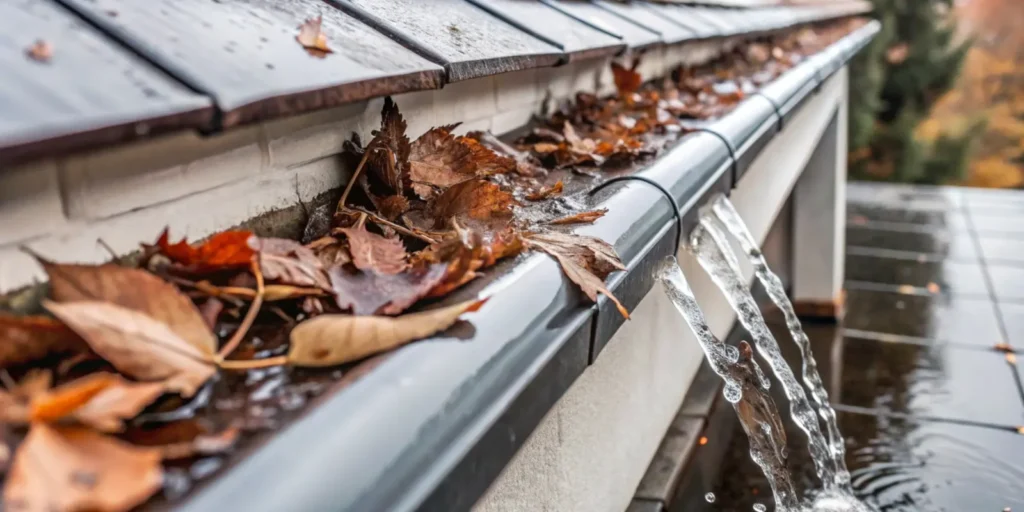
A water leak behind gutters is almost always caused by a missing, too-short, or wrongly installed drip edge, which lets water cling to the roof edge and sneak behind the gutter instead of falling into it. Rule out a clog or a loose gutter first, then check the drip edge. The permanent fix is installing a proper drip edge or gutter apron so water is directed where it belongs. Left alone, it rots your fascia and roof edge.
It’s a small, easily overlooked strip of metal at the roof’s edge called the drip edge. When it’s missing, too short, or installed incorrectly, water clings to the roof edge and follows it backward through a quirk of physics, slipping behind the gutter instead of dropping into it. It looks like a gutter problem, but it’s really a roof-edge problem.
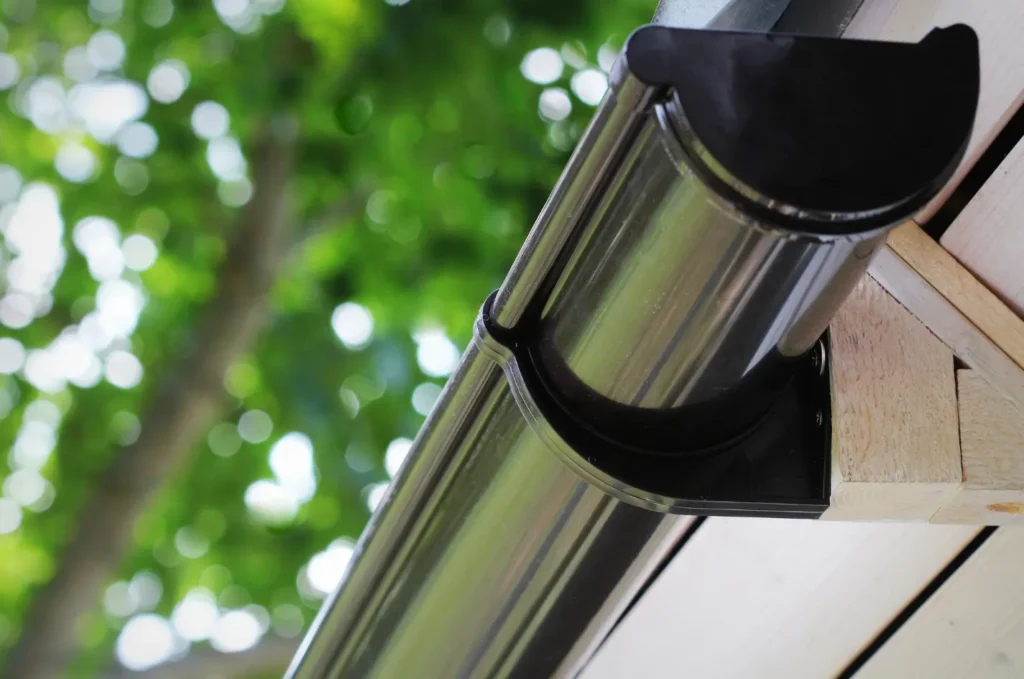
Water runs behind gutters because of capillary action, the tendency of water to cling to a surface and follow it around rather than simply falling straight down. When roof shingles don’t extend far enough past the edge, or when the drip edge is missing or misinstalled, water wraps back under the roof edge and travels behind the gutter. It’s not defying gravity so much as sticking to the roof.
The drip edge exists specifically to defeat this. It’s an L-shaped strip of metal at the roof’s edge that breaks the water’s grip on the surface and forces it to drop cleanly into the gutter. Without that clean break, water beads along the underside of the shingles, curls back toward the fascia, and ends up exactly where you don’t want it. Low-pitch roofs, common on many ranch and Cape-style Medford homes, are especially prone to this.
Before you blame the drip edge, work through a quick process of elimination, because a few other issues can mimic the same symptom. Checking them in order saves you from fixing the wrong thing. Start simple and work toward the roof edge.
Always rule out a clog first. A blocked downspout makes water back up and leak from everywhere, which can look like a serious problem when it’s really just debris. Clear your downspouts and gutters, then watch during the next rain. If the leaking stops, you’ve solved it the easy way. If water still runs behind the gutter on a clean, free-flowing system, move on.
Next, check whether the gutter itself has pulled away. Loose hangers or screws let the gutter sag or tilt away from the fascia, opening a gap for water to slip behind. Look for a gutter that no longer sits tight against the roof edge. Re-securing the hangers and closing that gap sometimes fixes the leak on its own. If the gutter is snug and water still gets behind it, the drip edge is your prime suspect.
If the downspouts are clear and the gutter is tight, the drip edge is almost certainly the cause. It may be missing entirely, too short to bridge the gap between the roof deck and gutter, lying flat instead of angling down, or, a common error, installed behind the gutter instead of over its back edge. Any of these lets water bypass the gutter and reach the fascia. Confirming this requires a ladder and a close look at the roof edge, which is where a professional comes in.

Yes, water behind the gutter is a bigger deal than it looks, because it attacks the wooden edge of your roof. Over time, that constant moisture rots the fascia boards, peels paint, saturates the soffits, and can work its way under the shingles into the roof deck. What starts as a harmless-looking trickle can become a genuine roof leak repair in Medford homes and an expensive wood repair.
The damage is slow and hidden, which is what makes it dangerous. Because the water runs down behind the gutter and along the fascia, you may not notice the rot until the wood is soft or the paint is bubbling. In a wet climate, ignoring it for a couple of seasons can turn a simple drip-edge fix into a fascia and soffit replacement.
You stop water from running behind gutters by installing or correcting the drip edge, or by adding a gutter apron where a drip edge can’t easily be changed. Both are strips of flashing that bridge the gap between the roof edge and the gutter in cedar shake roofs, giving water a clean path down into the trough. The right fix depends on your existing setup.
The main solutions a pro will consider:
These are precise fixes done at the roof edge on a ladder, so they’re best left to a professional who can confirm the exact cause and correct it safely. The materials are inexpensive; getting the detail right is what matters.
Medford’s climate and older housing make gutter repair problems especially common, and especially worth fixing fast.
Freeze-thaw damage: With roughly 100 freeze-thaw cycles a year, water trapped behind a gutter freezes and expands, accelerating fascia rot and prying materials apart.
Older homes, older edges: Many Medford homes predate modern drip-edge standards, so missing or outdated flashing is a frequent find during any roof inspection Medford homeowners request.
Low-pitch roofs: Ranch and Cape-style homes with shallow roof slopes are the most prone to capillary action pulling water back behind the gutter.
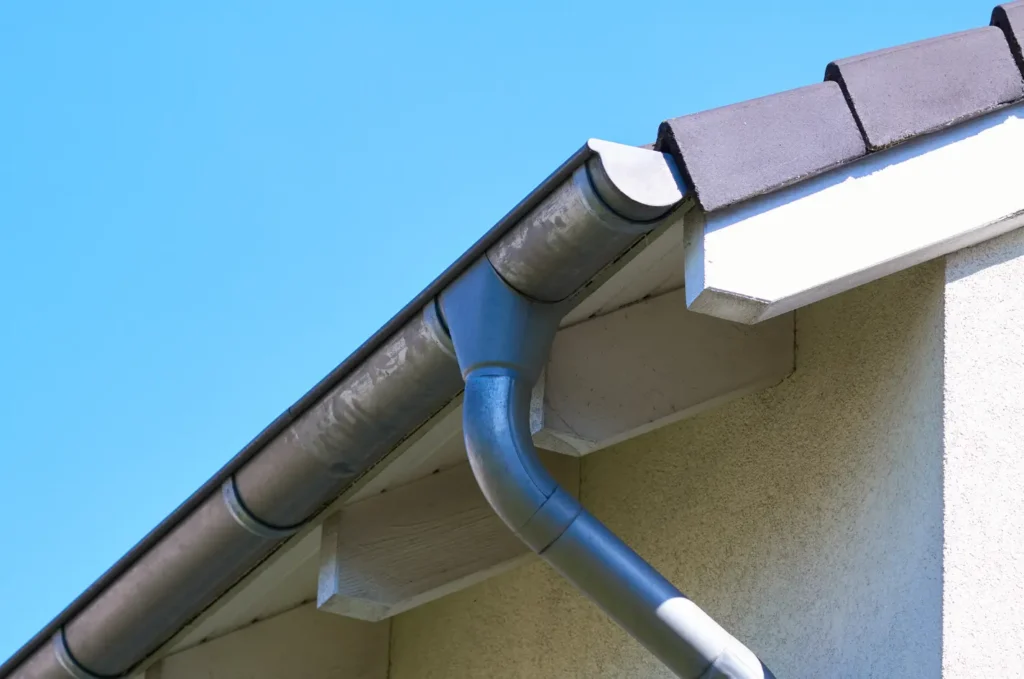
At OneGuard Roofing, we find exactly why water is getting behind your gutters and fix it at the roof edge, not with a temporary patch. As a roofing company Medford homeowners trust, we correct drip-edge and flashing problems before they rot your fascia. Honest work, done right.
Water running behind your gutters isn’t a gutter defect, it’s a roof-edge signal. Nine times out of ten the culprit is a missing or misinstalled drip edge letting water follow the roof back to your fascia. Rule out a clog and a loose gutter, and if water still sneaks behind, the drip edge is the answer, and the fix is straightforward.
Don’t let a small trickle quietly rot your roof edge. Caught early, this is an inexpensive repair. Ignored, it becomes fascia, soffit, and roof-deck damage that costs far more.
Book a free drone roof inspection with OneGuard Roofing, the roofing company Medford homeowners rely on for straight answers.