Fascia and Soffit Damage: How It Affects Your Roof and Gutters
Fascia is the vertical board along your roof edge that holds your gutters; soffit is the panel underneath that ventilates…

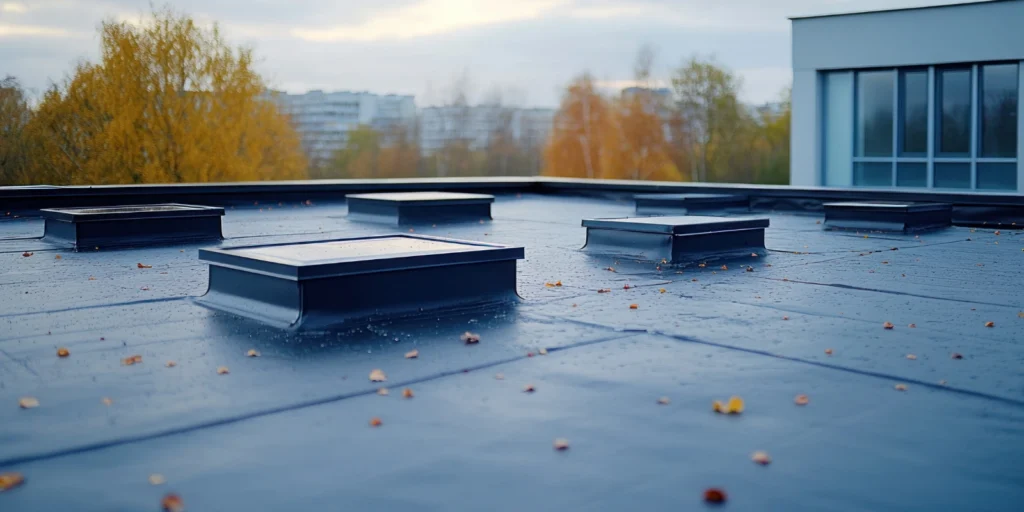
Roof drainage on a commercial roof fails when water can’t get off the surface fast enough, usually from clogged drains, blocked scuppers, too little slope, or a settling building. The danger is a vicious cycle: ponding water is heavy, about 5.2 pounds per square foot per inch, so it bows the deck, which deepens the pool, which adds more weight. Caught early with inspections and drain cleaning, it’s cheap to fix. Ignored, it can end in leaks or structural collapse.
A flat commercial roof has a problem a pitched roof never faces: water doesn’t just run off. A sloped residential roof sheds rain by gravity alone, but a flat roof depends on an engineered system of slopes, drains, and scuppers to move water off the surface. When that system works, you never think about it. When it fails, the damage can be catastrophic, and it usually starts with something as small as a handful of wet leaves.
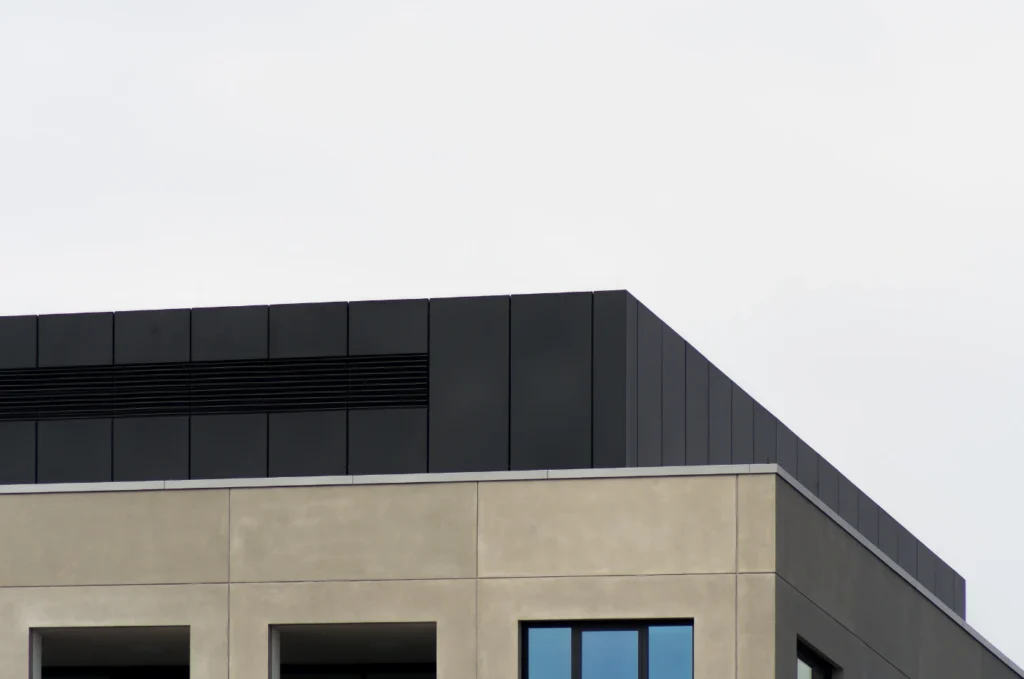
Flat roof drainage is supposed to move water off the surface within hours using a built-in slope and a network of drains and scuppers. Flat roofs aren’t truly flat: building codes require a minimum slope of about a quarter inch per foot, steering water toward collection points. From there, interior drains carry it through pipes inside the building, while scuppers let it exit sideways through the parapet wall.
A well-designed system also builds in redundancy. Overflow scuppers act as a safety valve, giving water an escape route if the main drains clog or rainfall exceeds the design limit. When every part is clear and correctly sized, surface water flows off or evaporates within hours. The trouble begins the moment any one of those parts stops doing its job.
The most dangerous thing about flat roof drainage failure is that it feeds itself, turning a minor blockage into a structural threat. Once water starts ponding, a self-reinforcing cycle begins, and each stage makes the next one worse. Understanding this chain is the key to seeing why small problems can’t be ignored.
It starts when water has nowhere to go. A clogged drain, a blocked scupper, or a low spot lets rainwater collect instead of draining. If that water sits for more than 48 hours, it’s officially ponding, and the clock on damage starts ticking.
Water is deceptively heavy. Ponding adds roughly 5.2 pounds per square foot for every inch of depth, and that load presses down on the roof deck. Over time, the deck deflects, or bows, under the weight, creating an even lower spot right where the water already sits.
Now the trap is set. The new low spot collects even more water, which adds even more weight, which deepens the deflection further. This is the self-reinforcing loop: more water, more sag, more water. Left unchecked, it can progress past the structural capacity of the deck, and clogged drains with ponding have been linked to real commercial roof collapses.
While the structure strains, the standing water attacks the surface. Ponding acts like a magnifying glass for UV rays, accelerating membrane breakdown, and it encourages algae and vegetation that root into the rubber roof material. Eventually the water finds a seam or weak point and becomes an interior leak, often far from where it entered.
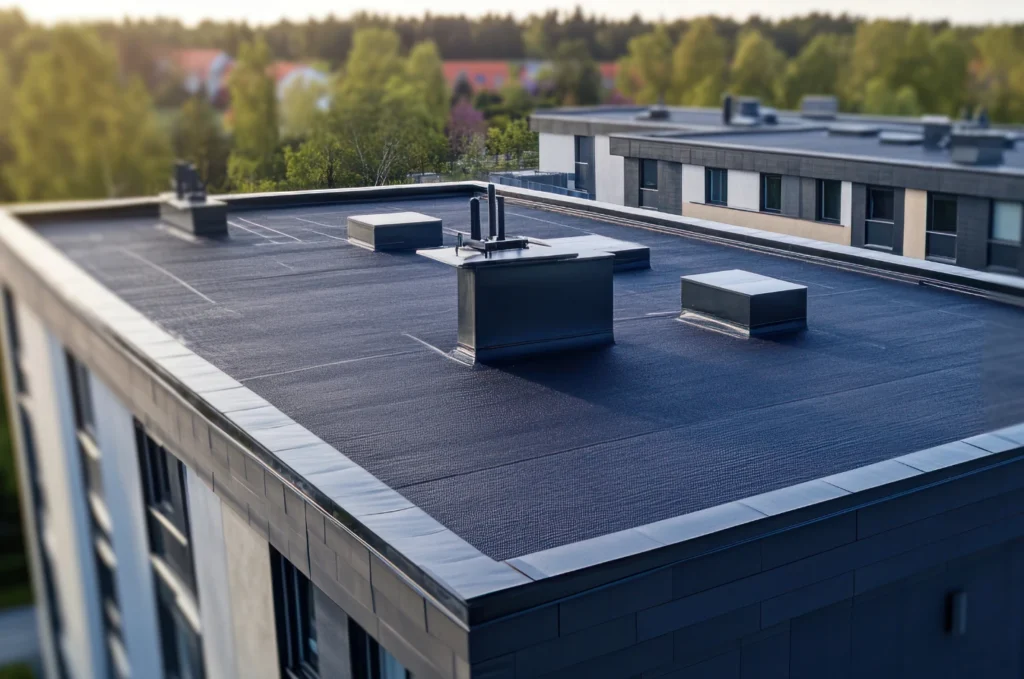
Drainage failures almost always trace back to a handful of specific, findable points. The good news is that most are simple and inexpensive to repair a roof in Bedford if caught early. These are the usual culprits on a commercial flat roof.
The clearest warning sign is standing water that lingers more than a day or two after rain, but several others signal trouble too. Because flat roof leaks often show up far from their source, spotting these early clues can save you from major damage. Watch for the following.
You prevent most drainage problems with routine maintenance and, where needed, by correcting the roof’s slope. The vast majority of ponding starts with simple, cheap-to-fix issues, so consistency is your best protection. When the problem is structural, a professional re-slope solves it for good.
The proven prevention playbook:
One more reason to stay on top of it: most roofing companies in Bedford require proper drainage and won’t cover damage caused by standing water. Neglect can leave you paying the full bill.
Bedford’s New England weather is especially hard on flat commercial roofs, which makes proactive drainage care essential here. Flat roofs on Bedford buildings face a specific set of seasonal challenges.
Freeze-thaw and ice damming: With roughly 100 freeze-thaw cycles a year, water in scuppers and drains can freeze, blocking outlets and adding ice weight on top of the water.
Heavy snow loads: Snowmelt pools fast on low-slope roofs, and combined with poor drainage, the extra weight is a real structural concern.
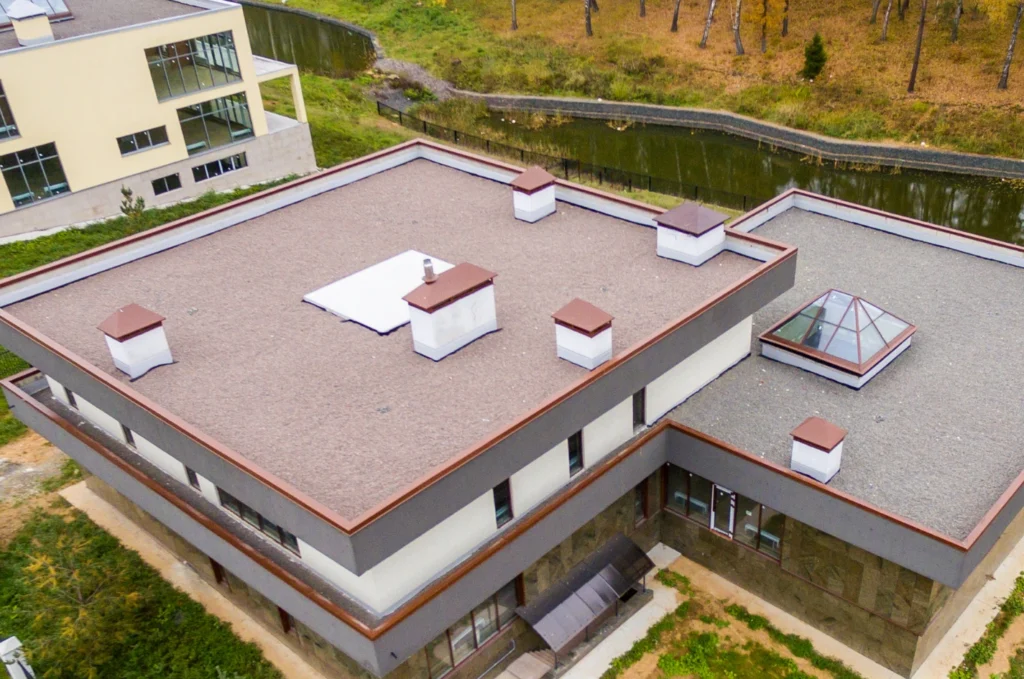
At OneGuard Roofing, we find and fix drainage problems before they snowball into structural damage. As a trusted roofing company Bedford businesses rely on, we keep water moving off your flat roof and away from your building. Honest work, done right.
Roof drainage on a commercial building is a quiet system that only gets loud when it fails, and by then the damage can be severe. The lesson is in the vicious cycle: standing water is heavy, it bows the deck, and the sag pulls in more water until something gives. But that whole chain starts with something as simple as a clogged drain, which is why routine care pays for itself many times over.
Inspections and drain cleaning cost a fraction of a re-slope, and a re-slope costs a fraction of a structural repair or collapse. Catch it early, keep the water moving, and your flat roof will protect your building for decades.