How to Cover Roof with Tarp After Storm: Repair Water Damage
To tarp a roof after a storm, you need to secure a heavy-duty polyethylene tarp over the damaged area by…

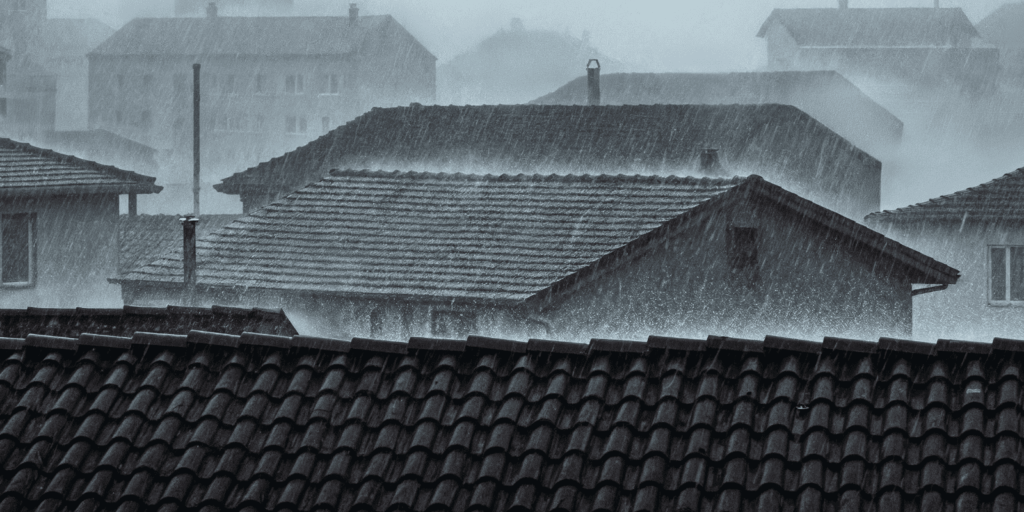
After severe weather strikes, assessing storm damage roof conditions quickly and accurately determines whether you need emergency intervention, standard roof repair, or complete roof replacement and acting within the first 24-48 hours prevents secondary damage from water infiltration that can turn manageable repairs into major restoration projects.
This comprehensive guide walks you through identifying roof storm damage, understanding what requires professional attention, navigating insurance claims, and securing quality roofing services that restore your home’s protection.
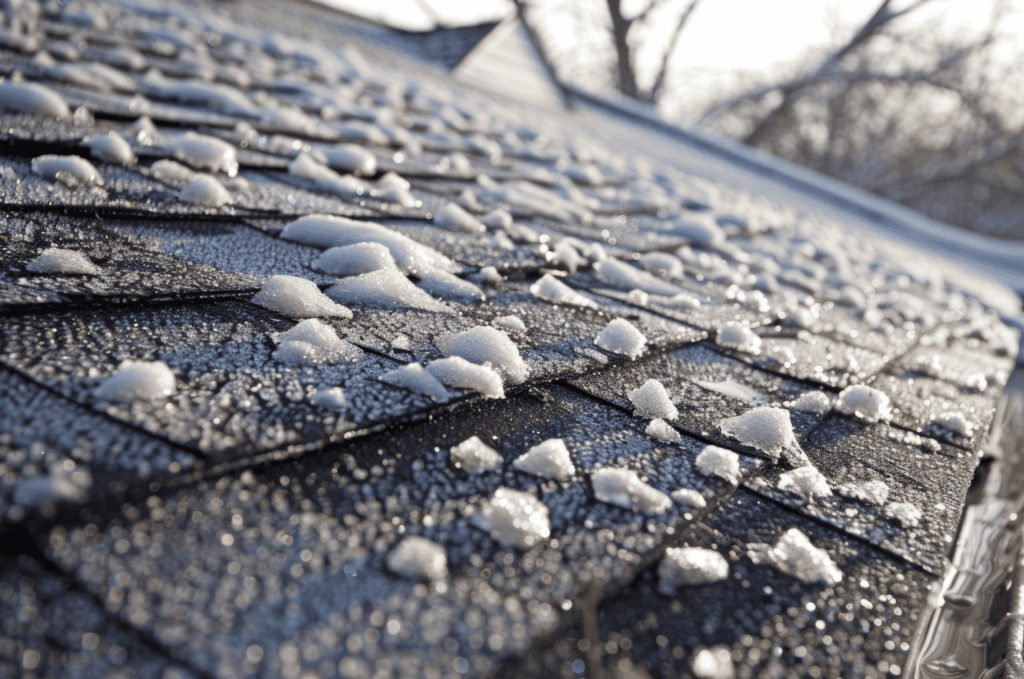
Different storm types cause distinct roof damage patterns. Recognizing these patterns helps you communicate effectively with roofing professionals and insurance adjusters.
High winds common during Boston’s nor’easters and severe thunderstorms, lift, crack, and remove shingles from roof surfaces. Wind damage often appears along roof edges, ridges, and corners where uplift forces concentrate. Missing shingles, curled edges, and exposed underlayment indicate wind-related roof damage requiring prompt roof repair to prevent water infiltration.
Hail strikes create circular depressions in shingles, dislodging protective granules and compromising waterproofing integrity. Hail damage isn’t always visible from ground level professional roof inspection reveals impacts that untrained eyes miss. Severe hail can crack shingles, dent metal components, and damage flashing around penetrations.
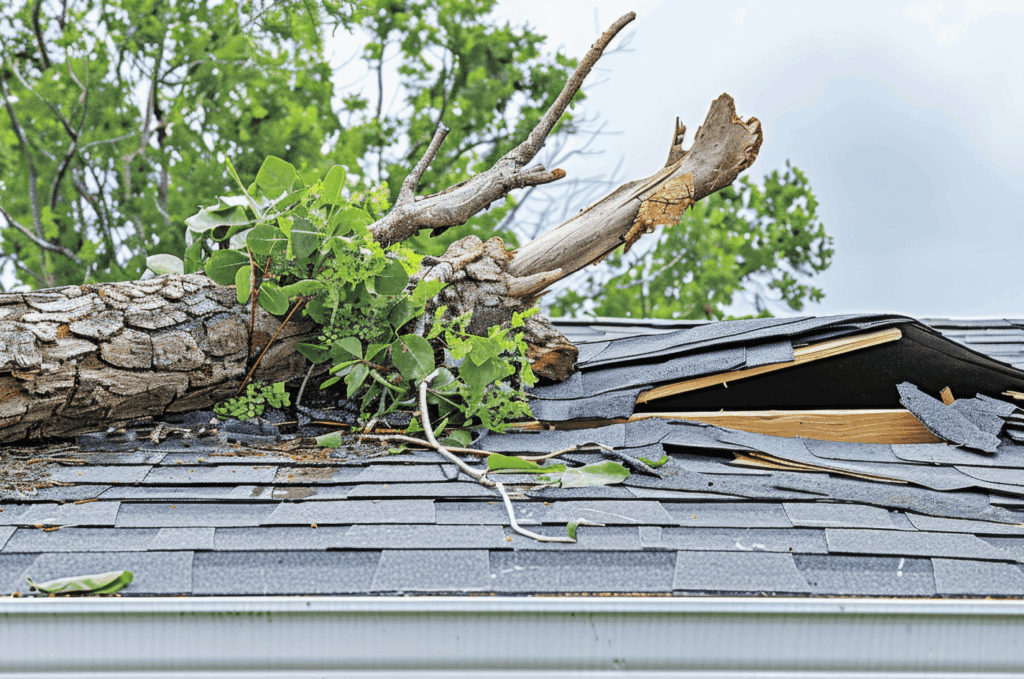
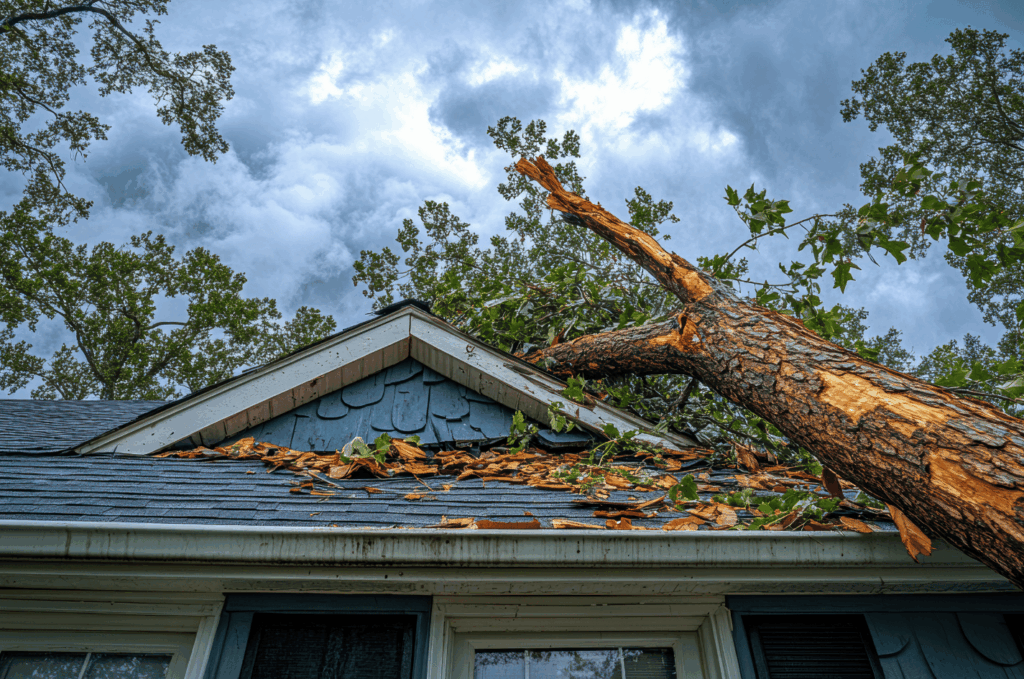
Fallen trees, broken branches, and wind-driven debris cause immediate, obvious storm damage roof situations. These impacts often puncture through roofing materials into living spaces, creating emergency conditions requiring immediate tarping and subsequent roof repair or roof replacement. Even smaller debris can crack shingles and compromise seals.
Heavy rain during storms exploits any existing weakness in your roof. Wind-driven rain penetrates at angles normal rainfall doesn’t reach. Clogged gutters cause water backup under roofing edges. The result: roof leak problems that may not appear until hours or days after storms pass, as water travels along structural members before emerging as interior damage.
After storms pass, homeowners naturally want to assess roof damage immediately. However, safety must guide your approach.
Safely assess storm damage roof conditions from the ground by looking for:
• Missing or displaced shingles visible from yard or street
• Shingle debris scattered around your property
• Damaged or detached gutters and downspouts
• Fallen tree limbs on or near the roof
• Visible dents or damage to metal vents and flashing
• Sagging or uneven rooflines indicating structural damage
Check interior spaces for signs of roof damage. In your attic, look for daylight through roof boards, water stains on rafters or sheathing, damp insulation, and any visible holes or damage. Throughout your home, watch for new water stains on ceilings, dripping water, peeling paint, and musty odors indicating moisture infiltration from roof leak problems.
Never climb onto a storm-damaged roof yourself, conditions may be unstable, and wet surfaces create fall hazards. Professional roof installation after significant storms identifies damage invisible from ground level, provides documentation for insurance claims, and ensures nothing is missed. Boston roofing services equipped with drone technology can assess roof damage safely and comprehensively without anyone walking on potentially compromised surfaces.
Taking appropriate immediate action protects your property and strengthens your insurance claim position.
Before any cleanup or temporary repairs, photograph and video all visible roof damage from multiple angles. Document interior damage as well. Note the date and time of the storm and when damage was discovered. This documentation proves invaluable when filing insurance claims and working with roofing services on repair estimates.
If safe to do so, take reasonable steps to prevent additional damage. Move furniture away from active leaks. Place buckets to catch dripping water. If major openings exist, contact roofing services for emergency tarping, attempting this yourself on a damaged roof is dangerous. Insurance policies typically require reasonable mitigation efforts, but never risk personal safety.
Report storm damage roof claims promptly most policies require timely notification. Provide your documentation, describe the damage, and ask about the claims process timeline. Request information about covered repairs and any preferred contractor requirements. Having a professional roof inspection report strengthens your claim significantly.
Determining whether roof repair suffices or roof replacement makes better sense depends on damage extent and your roof’s overall condition.
Roof repair effectively addresses storm damage when damage is localized to specific areas, your roof was in good condition before the storm, less than 25-30% of the roof surface is affected, structural components remain sound, and matching materials are available. Quality storm damage repairs restore full protection and extend your roof’s service life.
Roof replacement becomes the better option when storm damage affects large portions of your roof, your roof was already aging or deteriorating before the storm, structural damage requires deck or framing repairs, or repair costs approach 40-50% of replacement cost.
Navigating insurance claims for roof storm damage requires understanding the process and your policy coverage.
Most homeowners insurance covers storm damage roof repairs when damage results from covered perils like wind, hail, and falling objects. Policies typically pay for necessary repairs to restore pre-storm condition. However, coverage for roof replacement depends on policy terms, roof age, and damage extent. Understanding your specific policy helps set realistic expectations.
Professional roof inspection reports from qualified roofing services strengthen claims significantly. These reports document all damage including issues not visible from ground level and provide repair or replacement cost estimates that insurance adjusters can verify. Having your own inspection before the adjuster visits ensures nothing is overlooked.
Selecting the right contractor for storm damage roof repair ensures quality results and protects your interests.
Choose roofing services that offer:
• Local presence and reputation: Established Boston roofing services with verifiable track records
• Proper licensing and insurance: Massachusetts contractor licensing and comprehensive coverage
• Manufacturer certifications: GAF, CertainTeed, or similar credentials demonstrating expertise
• Detailed written estimates: Transparent pricing with itemized materials and labor
• Workmanship warranties: Strong guarantees backing repair quality
• Insurance claim experience: Ability to work effectively with insurance processes
After major storms, transient contractors, canvas affected neighborhoods offering quick repairs. These operators often deliver substandard work, disappear before problems surface, and leave homeowners without recourse. Choose established local roofing services with permanent addresses, verifiable references, and reputations worth protecting.
Boston’s unique weather patterns create specific storm damage roof challenges throughout the region.
Nor’easters bring sustained high winds, heavy precipitation, and sometimes significant snow loads. Summer thunderstorms deliver high winds, hail, and heavy rain. Winter storms combine snow, ice, and wind that stress roofing systems from multiple angles. These demanding conditions mean Boston roofing services must understand storm damage patterns specific to our region.
Storm damage affects homes throughout Greater Boston from dense urban neighborhoods in Boston proper to tree-lined suburbs in Brookline, Newton, and Cambridge. Coastal communities face additional wind exposure. Older neighborhoods feature aging roofs more vulnerable to storm impacts. Quality roofing services understand these variations and adapt approaches accordingly.
OneGuard Roofing provides comprehensive storm damage roof assessment and repair throughout Boston and Greater Boston. Our licensed and insured team responds quickly after storms, providing thorough roof inspection and quality repairs that restore your home’s protection.
Don’t let storm damage roof problems escalate into major repairs. Prompt professional assessment identifies all damage, provides documentation for insurance claims, and ensures nothing is missed.
Contact OneGuard Roofing to schedule your free drone roof inspection. Get an expert storm damage assessment and the quality roof repair your home deserves.